7 Mistakes You're Making with ESL Lesson Plan Templates for Job Interviews (and How to Fix Them)
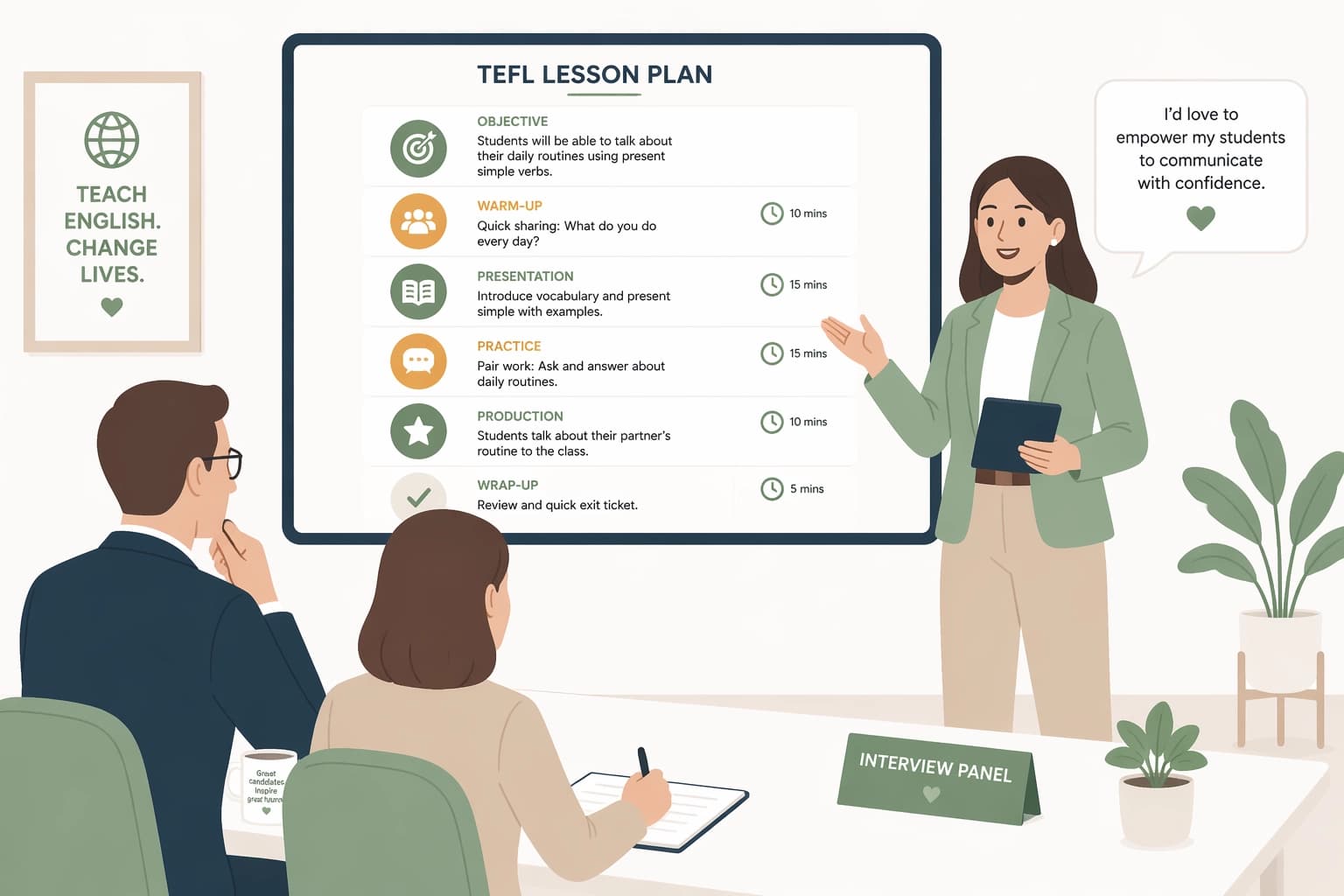
You've landed the interview. You've got the experience. But now comes the part that makes even veteran TEFL teachers break out in a cold sweat: The Demo Lesson.
You have 20 minutes to prove you can manage a room, engage students, and actually teach a grammar point without putting everyone to sleep. Naturally, you reach for a lesson plan template. You find one online, fill in the blanks, and hope for the best.
Sound familiar?
The problem is that generic templates are a trap. They make you look like every other candidate. If you want to land that high-paying business English gig or that dream position at a top-tier international school, you need to avoid these seven common mistakes that kill your chances before you even say "Hello, class."
1. The "One-Size-Fits-All" Trap
Most teachers grab a standard template and try to force their ideas into it. The result? A lesson that feels rigid and robotic. Interviewers aren't just looking for content; they're looking for your ability to adapt to a specific group of learners.
The Mistake: Using a generic template that doesn't account for the specific student profile provided by the school.
The Fix: Use Class Profiles to bake personalization into the DNA of your lesson. Instead of a "Generic B1" lesson, create a plan specifically for "B1 Adult Professionals in Tokyo." When you show an interviewer that your lesson was built with their students' specific goals and weak areas in mind, you instantly move to the top of the pile.
2. The Missing "Why" (Methodology)
An interview lesson plan isn't just for you: it's for the observer. If your plan says "Activity 1: Roleplay" without explaining why that activity is there, you're missing a chance to showcase your pedagogical expertise.
The Mistake: Failing to explain the methodology (PPP, TBL, Lexical Approach) behind your choices.
The Fix: Use a dedicated Demo Lesson Builder. At Tyoutor Pro, our builder doesn't just generate the lesson; it includes professional methodology explanations. It tells the interviewer why you chose a specific warmer and how it scaffolds the main activity. It makes you look like a seasoned pro who understands the "how" and "why" of language acquisition.

3. Ignoring the "L1 Elephant" in the Room
If you're teaching a group of Spanish speakers, their struggles with the Present Perfect will be different from a group of Mandarin speakers. Most templates ignore native language (L1) interference entirely.
The Mistake: Planning a lesson that treats all learners as if they have the same linguistic background.
The Fix: Leverage L1-aware content. Our AI-powered tools analyze student native language patterns to highlight specific "danger zones" for that group. Mentioning during your interview that you've anticipated specific L1 interference patterns shows a level of sophistication that most teachers simply don't have.
4. The TTT (Teacher Talking Time) Overload
We've all been there: you're nervous, so you talk. You explain the grammar for 15 minutes, leaving only 5 minutes for student practice. A lesson plan template that is just a list of "Teacher explains X" is a red flag for observers.
The Mistake: Designing a lesson where you are the "Sage on the Stage" rather than the facilitator.
The Fix: Use an Activity Generator to bake student-centered tasks into your plan from the start. Focus on "Guided Discovery" tasks where students find the rules themselves. Tyoutor Pro helps you generate interactive warmers and communicative activities in under 60 seconds, ensuring your student-to-teacher talking ratio is perfectly balanced.

5. Vague Learning Outcomes
"Students will learn about food" is not a learning outcome. It's a topic. If your lesson plan doesn't have a specific, measurable goal, the interviewer will assume your teaching is just as aimless.
The Mistake: Writing broad, unmeasurable aims like "improve speaking" or "practice grammar."
The Fix: Set SMART objectives. Your goal should be: "By the end of this 20-minute demo, students will be able to use three specific 'ordering at a restaurant' functional phrases in a roleplay scenario." When your plan is this precise, it shows you are results-oriented: a trait language schools love.
6. The "Scaffolding" Gap
You jump from a vocabulary list straight into a complex debate. The students (who might be played by other teachers in the interview) look confused. You've forgotten the scaffolding.
The Mistake: Expecting students to perform a task without giving them the "ladder" to get there.
The Fix: Use a Worksheet Builder to create custom gap fills, matching exercises, and reading comprehension tasks that lead students toward the final goal. A well-scaffolded lesson plan shows you understand the step-by-step nature of learning. Plus, having professionally formatted handouts ready to go (complete with answer keys) makes you look incredibly organized.
7. Sloppy, Non-Standard Formatting
First impressions matter. If your lesson plan is a messy Word doc with three different fonts and weird spacing, it screams "amateur." You want your plan to look like it came from a high-end publishing house.
The Mistake: Presenting a plan that is visually cluttered or hard to read at a glance.
The Fix: Export your plans as professionally formatted PDFs. Tyoutor Pro provides interview-ready outputs that are clean, modern, and easy for an observer to follow while you're teaching. It allows the interviewer to focus on your teaching skills, not your lack of design skills.
Reclaim Your Weekend (and Your Confidence)
Building the "perfect" demo lesson from scratch used to take hours. You'd spend Saturday night scouring Google Images for the right flashcards and Sunday morning wrestling with margins in Microsoft Word.
It doesn't have to be this way.
With Tyoutor Pro, you can go from a blank page to a fully personalized, methodology-backed, interview-ready lesson plan in about 60 seconds.
- Step 1: Select your Class Profile (level, nationality, goals).
- Step 2: Choose your tool (Lesson Generator or Demo Builder).
- Step 3: Generate, tweak, and export.
By eliminating the "scramble" of lesson planning, you save an average of 18 hours per month. That's time you can spend actually practicing your demo, researching the school, or — dare we say — living your life.

Ready to Land Your Next Teaching Gig?
Stop settling for "okay" lessons. Start delivering high-impact, personalized experiences that prove you're the expert they need to hire.
Try Tyoutor Pro today.
It's built by ESL teachers, for ESL teachers. Whether you're prepping for a B1 adult group or a young learners' demo, we've got the tools to help you shine.
Get Started for Free — Ready in seconds. Cancel anytime.